English in the Caribbean
Geography
History
English in the Caribbean
Slavery in the Caribbean
Transportation of Indians
Jamaica
Barbados
The Caribbean Rim
Maps of the Caribbean
Literature
References
Geography
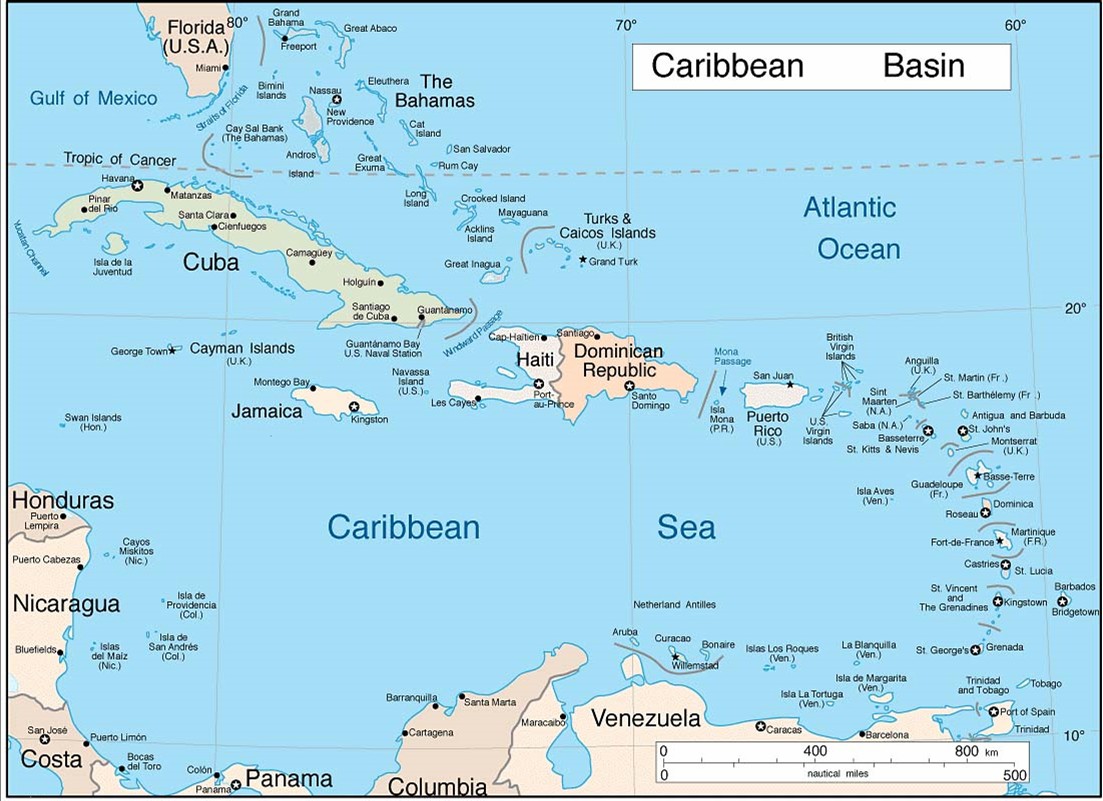
The Caribbean is a large area extending from the southern coast of the United States to the northern coast of South America, bounded on the west by Mexico and the Central American states and facing out to the Atlantic on the east. The section between the east of Mexico and the south of the United States is the Gulf of Mexico and does not contain any major islands; the Caribbean islands begin in the north with Cuba and the Bahamas and extend southwards to South America.
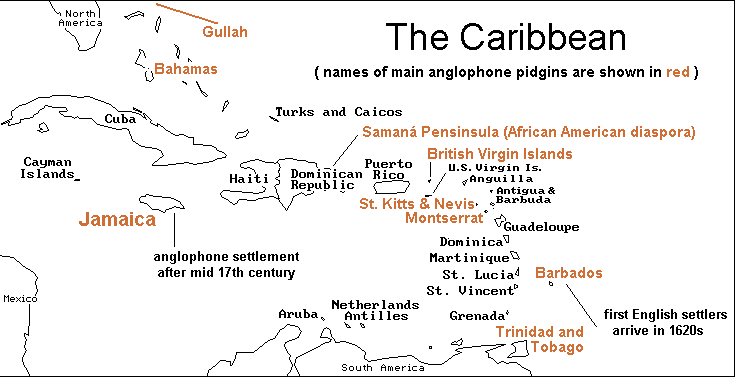
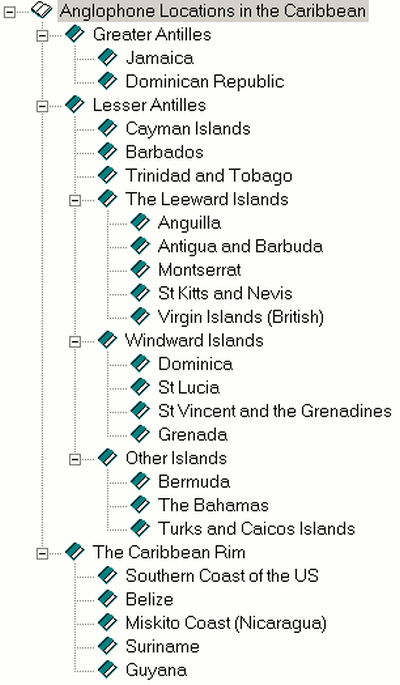
The anglophone Caribbean consists of the following islands:
1) Jamaica, Cayman Islands
2) Leeward Islands (St. Kitts Nevis, Montserrat, Antigua, Virgin Islands)
3) Windward Islands (St Lucia, St Vincent, Barbados, Grenada)
4) Trinidad and Tobago
The following sections of the Caribbean periphery were settled to varying degrees by the British as of the 17th century.
1) The southern United States
2) The Bahamas
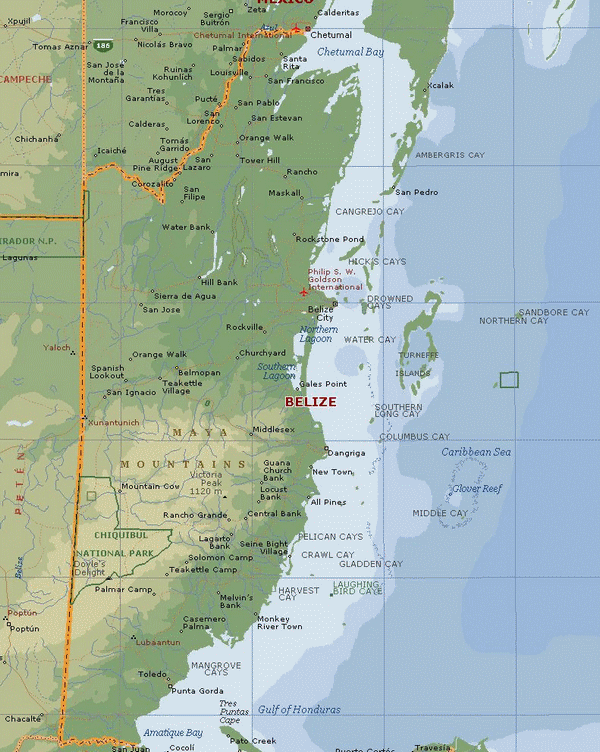
3) Belize (former British Honduras)
4) Costa Rica
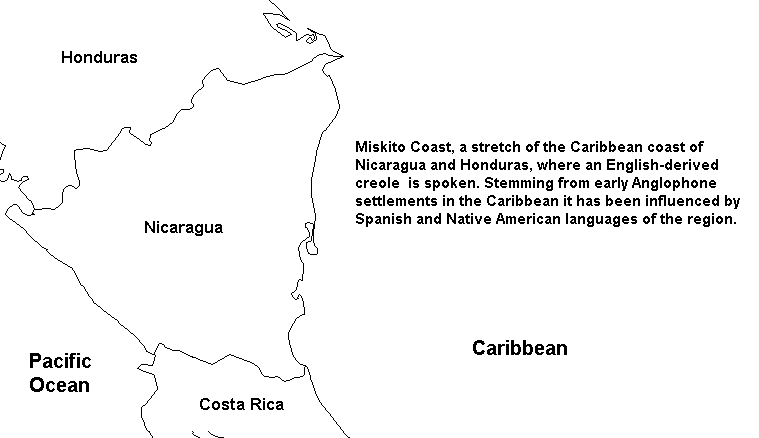
5) Nicaragua (the Miskito Coast)
6) Providencia (Providence Island)
7) Guyana (former British Guyana)
8) Suriname (former Dutch Guyana)
Apart from English, the two other main European languages are French and Spanish spoken on Haiti on the one hand and the Dominican Republic, Cuba and Puerto Rico on the other. Dutch was also present on the southern rim of the Caribbean.
History
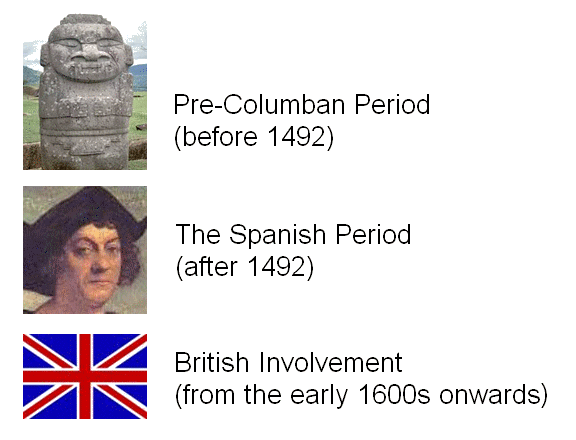
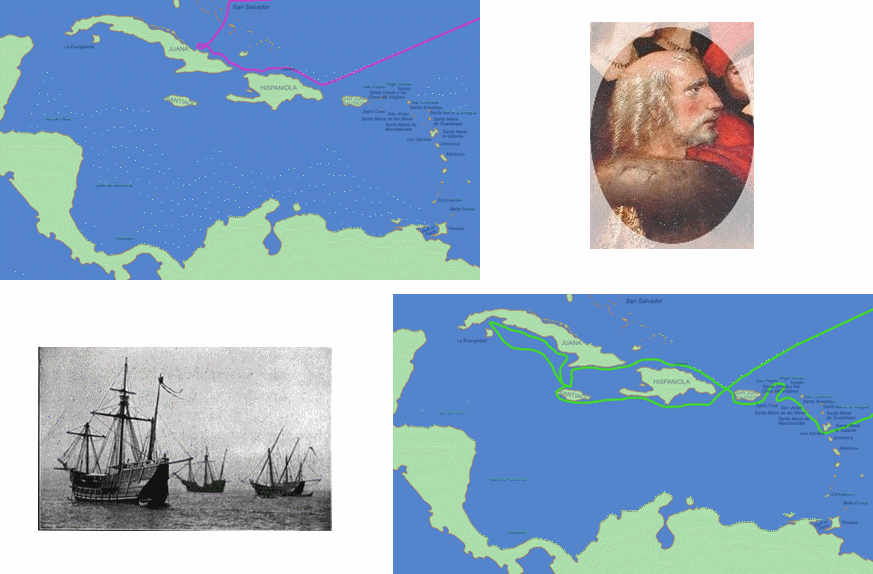
The islands of the Caribbean were discovered (for the Europeans) by the Italian explorer Christopher Columbus, working for the then Spanish monarchy. In 1492 he reached the Caribbean when he landed on the island of Guanahani in the Bahamas. In the following years the Spanish began to take possession of the Caribbean islands and the land on the Caribbean Rim. This meant that the major islands of the Caribbean – the Greater Antilles – were already Spanish possessions when the British began their involvement with the Caribbean in the early 17th century.
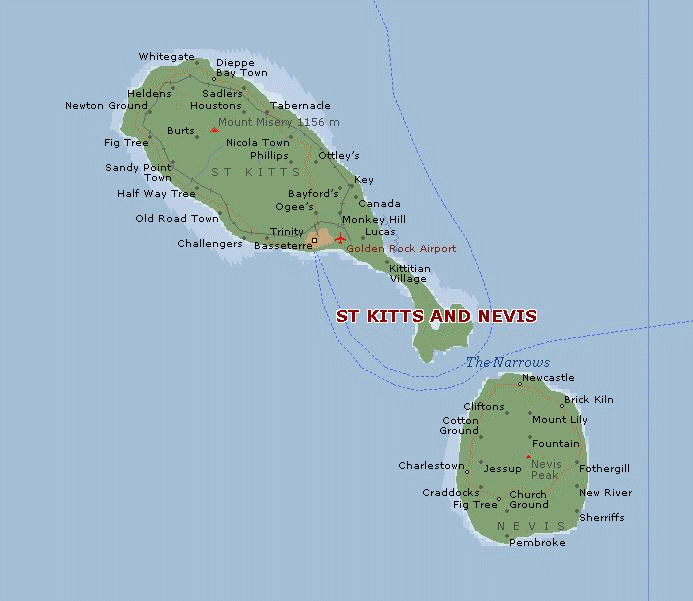
The first Caribbean islands to be settled by the British were St Kitts (1623/4) in the north-east and Barbados (1627) in the south-east corner of the Lesser Antilles (an arc-like chain of islands in the eastern Caribbean). When Barbados filled up, English-speakers left for other locations, especially for Jamaica after it was taken by the British from the Spanish by 1660.
.gif)
Initially, the Caribbean was populated by whites, during the so-called ‘Homestead Phase’, later by blacks taken from West Africa as slaves and transported across the Atlantic along the infamous Middle Passage.
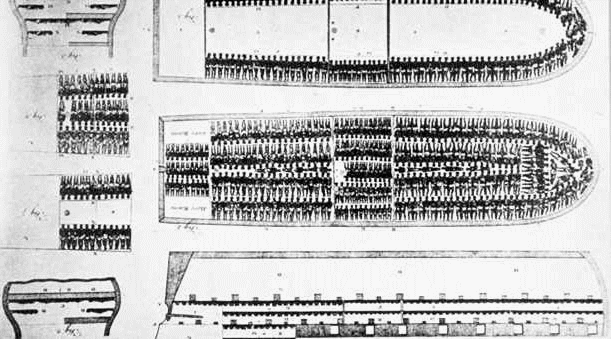
Slave ship used for transportation from West Africa to the Caribbean
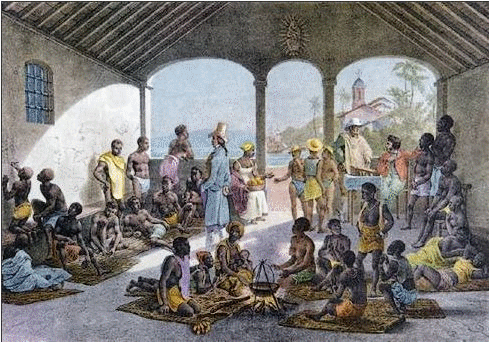
Slave market in the Caribbean
Many other smaller islands were populated by English-speakers and many changed hands between the colonial maritime powers, namely England, France, Spain, Portugal and the Netherlands. Most of these islands gained their independence in the mid 20th century.
In the late 17th century a number of Caribbean slaves were transported to the south-east of the United States to work on the large cotton plantations. Later slaves were transported directly. The system of slavery lasted until the end of the American Civil War (1861-65).

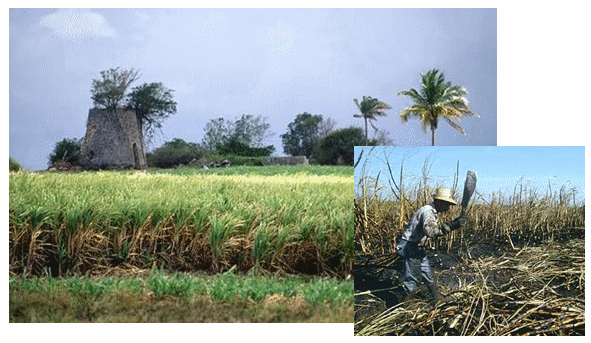
In the southern United States and on Cuba, the cultivation of tobacco is important. On the smaller Caribbean islands, sugar cane replaced tobacco as the main crop in the 17th century.
English the Caribbean
English is the Caribbean exists in various forms. Where speakers use a variety closer to more general English one speaks of an ‘acrolect’. Where people use the most vernacular variety of their location the term ‘basiclect’ is found. Inbetween there is a continuum of middle variaties known collectively as ‘mesolectal’ varieties.
Creole forms of English, as the most vernacular, are spoken widely in the Caribbean, both on the islands and on the Central and South American rim. For instance, Belize Creole English in Belize, Limón Creole English in Costa Rica, Miskito Coast Creole in Nicaragua, Sranan in Suriname are found on the edge of the Caribbean Basin. On the various islands creoles are spoken, some with quite large numbers as on the main anglophone island of Jamaica. In addition there are of course non-standard forms of other European varieties, some of these as creoles as on Haiti (left part of the island Hispaniola) where a French-based creole is spoken by several million people.
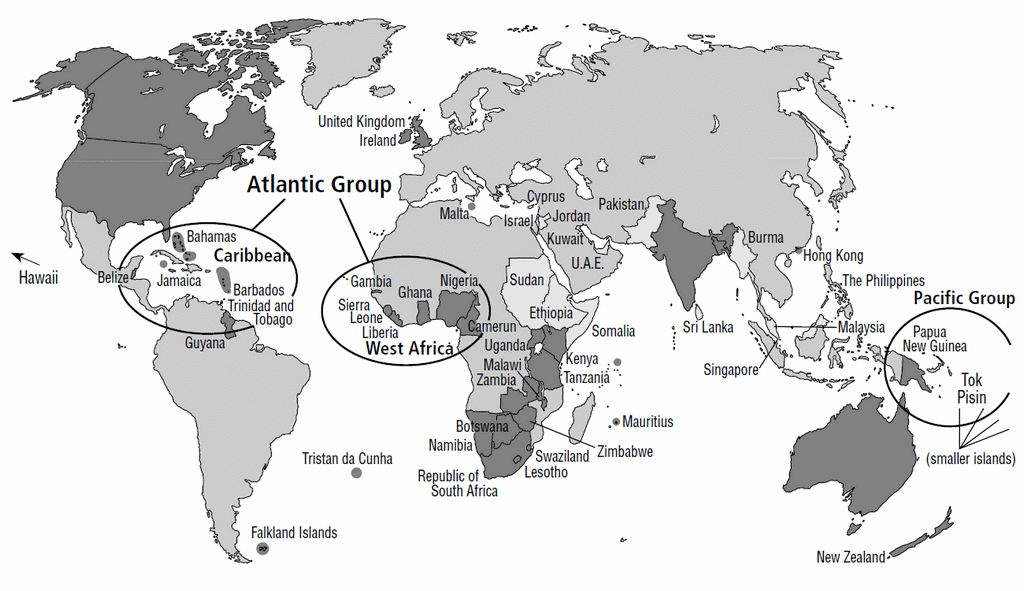
Slavery in the Caribbean
The origin of the African population of the Caribbean (and the southern United States) lies in the slave trade which led to the capture of Africans on the west coast of Africa and their transportation via the infamous Middle Passage to the Caribbean and later on to the south of the United States. The slaves were put to work on plantations as of the mid-17th century when the British realised that the people they took from Britain and Ireland, typically as indentured servants for a period of 5 or 8 years, were not suited to working in the tropical climate of the Caribbean. The main products which were plied along the return route of the Trade Triangle were tobacco, later sugar (from Caribbean sugar cane) and later still cotton from the region of the later southern United States.
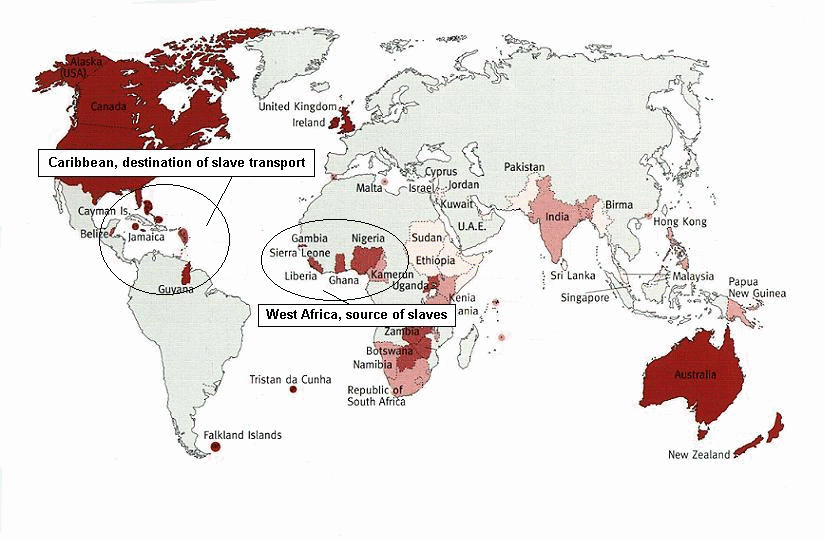
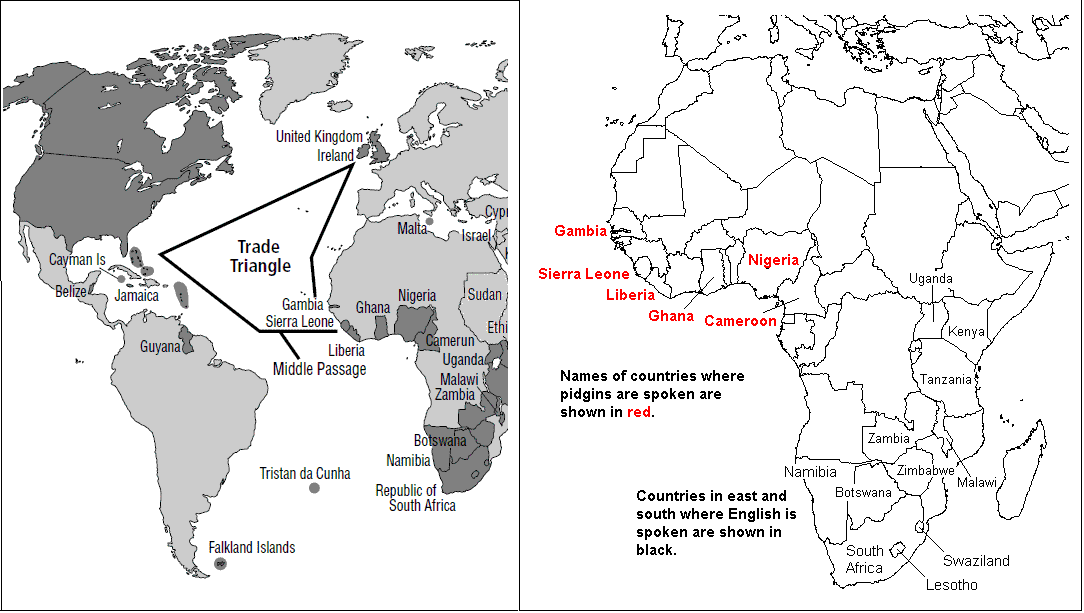
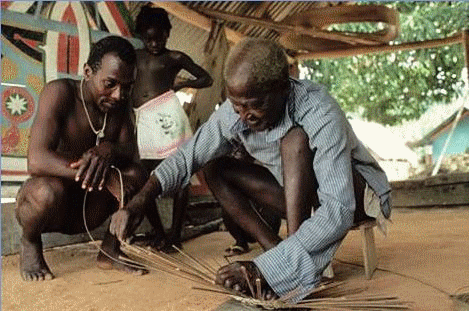
In the 17th, 18th and early 19th century slaves escaped from the coastal plantations and fled to the mountainous interior in various parts of the Caribbean and northern South America (for instance, in former Dutch Guyana, now Suriname, and in Jamaica). These people are called maroons and they frequently kept forms of creole spoken by their ancestors on the plantations. Saramaccan in Suriname is an example.
Transportation of Indians to the Caribbean
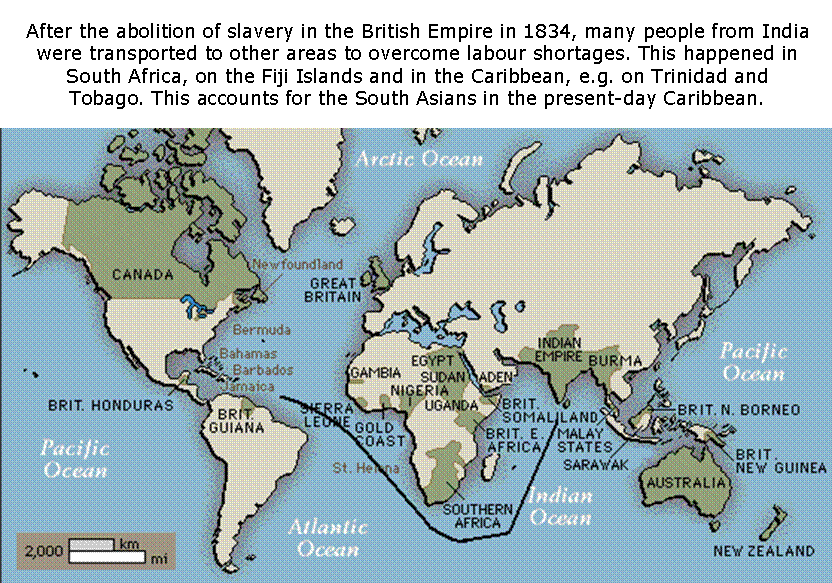
Trinidad and Tobago experienced an influx of tens of thousands of Indians during the nineteenth century. Some Indians came directly from India but many are the descendants of indentured labourers from other Caribbean islands. These originally worked on the sugar plantations and then on the newer plantations which produced cacao, the basis for cocoa and chocolate. The Indians of Trinidad and Tobago are mainly from the Hindi belt in the central north of the country and are ethnically Hindus.
Jamaica

Of all the Caribbean islands with English-based creoles, the most important is Jamaica. This island was taken by the British from the Spanish in 1655 and remained under British rule until its independence in 1962. Slaves were brought from West Africa to Jamaica from the latter half of the 17th century and it was not until the Emancipation Act in 1833 that slavery was abolished.
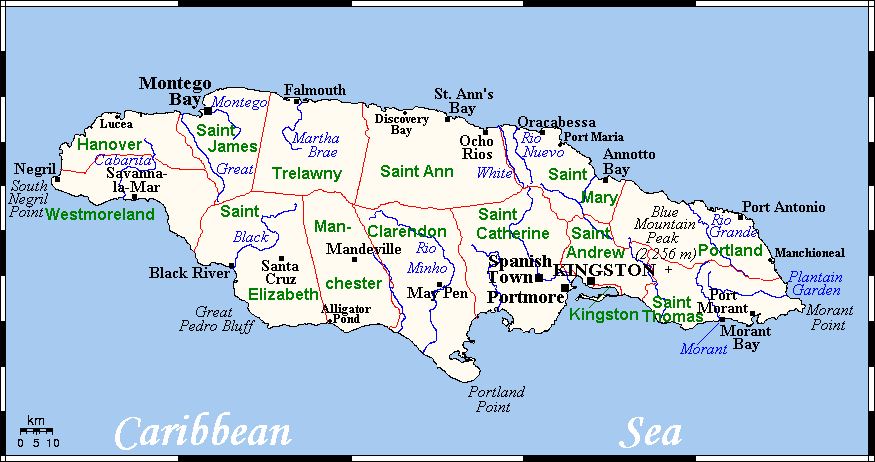
The English of Jamaica shows the typical creole continuum of former English colonies. The basilect exhibits many of the features of true creoles: analytic grammatical structure (little or no inflections), simplified phonology, notably lack of consonant clusters. As well as this Jamaican creole is a syllable-timed language (much as is French).
Between 2 and 3 million inhabitants speak a variety of English which has developed over the past few centuries during the colonial period. In addition to this, Jamaican English is spoken to a considerable extent in England notably in London due to immigration mostly after the Second World War (the so-called Windrush Generation, names after one of the main boats used to transport people from Jamaica to Britain). Estimates put the number of people of Caribbean origin in Britain at something over half a million many of whom would speak the creole English of their homeland if they belong to the working class in England where there would have been little opportunity to acquire more standard forms of language. The increase in the number of West Indian immigrants in England can be attributed to two factors. The first was the direct advertisement for labour which institutions like London Transport and the National Health Service carried out in the West Indies. This occurred in the 1950s and early 1960s. The second factor was a desire on the part of the inhabitants of former colonies to live in the home country and partake in the prosperity which was evident there in the years after the Second World War. Given the group of people who came for the first reason there is a large contingent of West Indian speakers among the working class in inner cities. This fact led to the retention of communal ties in Britain and to the survival of linguistic habits which might have been lost if the dispersion of the immigrants had been greater.
Pronunciation Loss of initial /h/ with partial restoration including hypercorrect insertion of non-etymological /h/, hour /hɑ/. Cluster simplification, especially in initial and final position, e.g. stand /tan/. Loss of post-vocalic /r/ and monophthongisation of rising diphthongs, e.g. writer /rata/. Realisation of /ə/ as /a/ or /ɪ/, e.g. razor /riɛza/, heaven /hɛvɪn/. Metathesis covers examples of plosive and fricative, e.g. ask /hɑks/.
Grammar Lack of agreement between subject and predicate is typical. No gender distinction with pronouns. A verb is not used in copulative sentences: John ill. The passive voice is generally lacking. Reduplication is common as a means for intensification: /huɑli huɑli/ ‘full of holes’, /ta:k ta:k/ ‘talk all the time’.
Vocabulary This contains many elements from various languages which have had an influence in Jamaica, e.g habble (< Spanish hablar), door-mouth (< Yoruba iloro enu ‘threshold’, lit. ‘porch mouth’).
Barbados
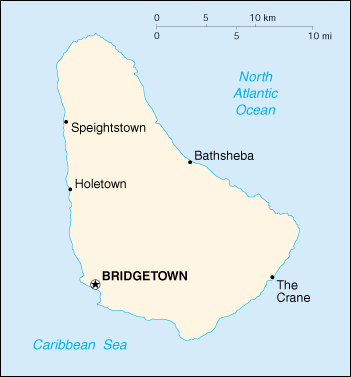
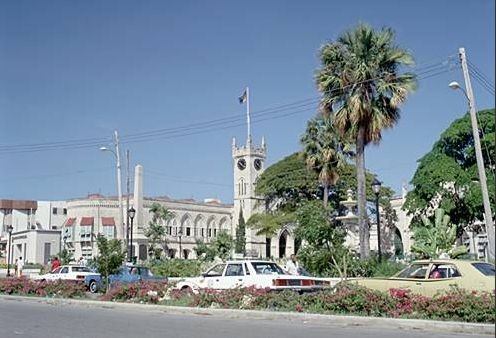
The Lesser Antilles, consisting of the Windward and Leeward Islands, form an arc in the south east of the Caribbean from Puerto Rico in the north down to Trinidad and Tobago in the south. The islands here are all small compared to the four large islands of Cuba, Jamaica, Hispaniola (Haiti and the Dominican Republic) and Puerto Rico. Because of their different settlement histories, determined by different European powers, they vary in language almost island by island. The two main Anglophone islands here are Barbados and Montserrat, both of which had an intake of English speakers already in the early 17th century. Many of these speakers came from Ireland and it is known that English speakers later disseminated from Barbados to other islands so that there is a possibility that some of the parallels between Irish English and forms of Caribbean creole - for instance structures involving verbal aspect - are not coincidental.
The settlement of Barbados
The English took control of the small island of Barbados in the south-east of the Caribbean in 1627. The first decades of their presence there are termed the Homestead Phase because then only whites from the British Isles went to the island.
Working in the fields in the tropical climate proved difficult for the British and Irish indentured labourers (people bound to work for some years to defray the cost of passage). The British then decided to take natives in West Africa (usually captured by local warlords) and transport them to the Caribbean using them as slave labour on the plantations. This happened in the later 17th century and afterwards.
English on Barbados developed out of transported varieties from the British Isles and later came under the influence of varieties which were created by Africans who were kept on the island as slaves.
Because of the small size of the island many people left and moved to other locations in the Caribbean carrying their forms of English with them. Some went to larger islands like Trinidad and Jamaica, some up the south-east coast of America, some indeed to the area of the Guyanas on the northern coast of South America.
These movements have meant that Barbadian English has had a significant influence on the formation of other varieties of English in the Caribbean region. The local form of English on the island is known as ‘Bajan’.
The Caribbean Rim
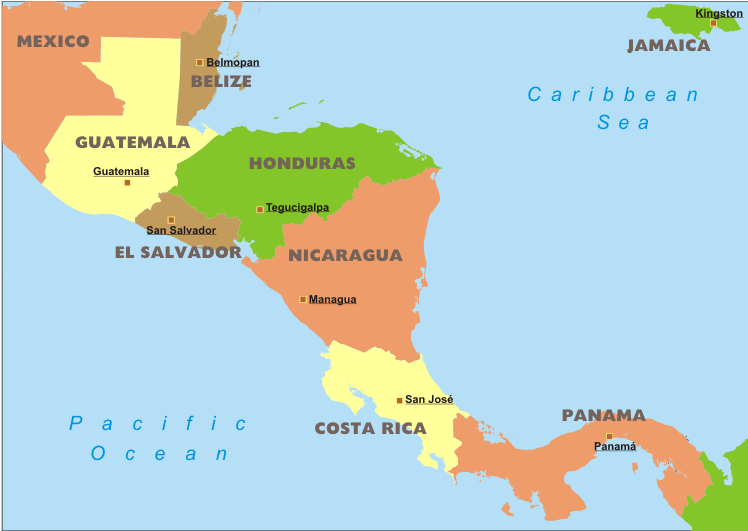
Belize (former British Honduras) and Miskito Coast
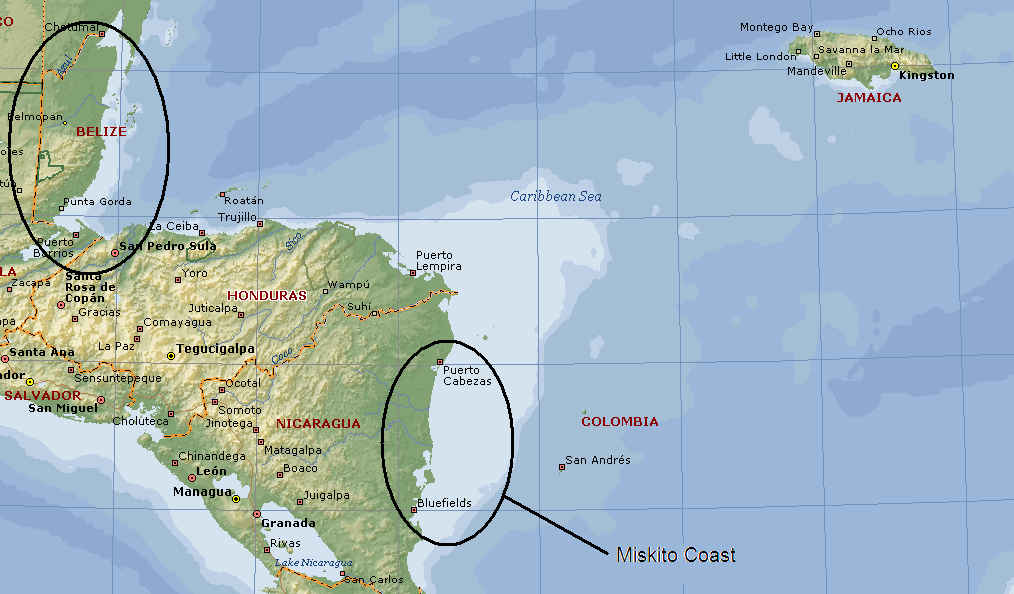
Miskito Coast
Suriname

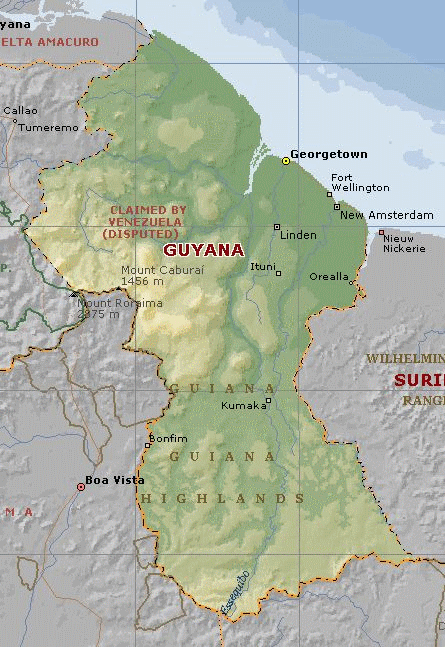
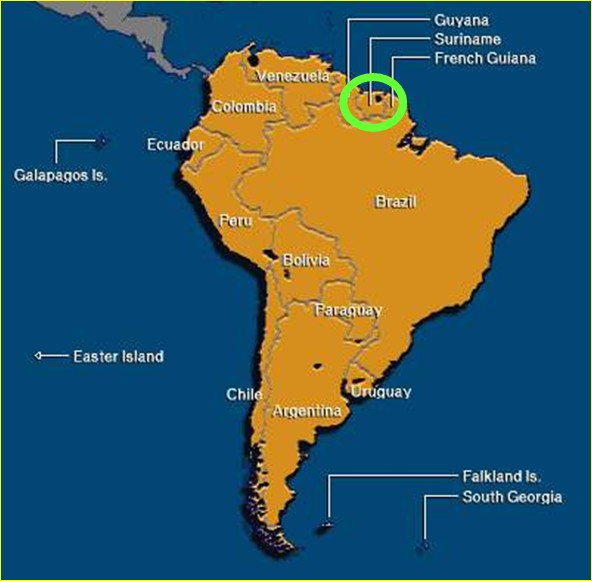
Maps of the Caribbean
.jpg)
The Americas (1626) by the English cartographer John Speed

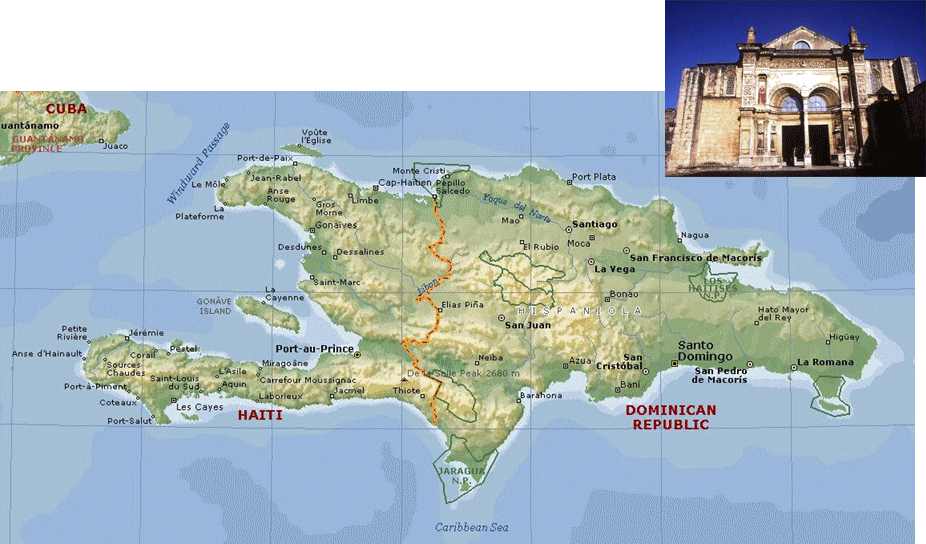
The islands of Hispaniola which consists of the Spanish-speaking Dominican Republic (on the right) and Haiti where Creole French is spoken.
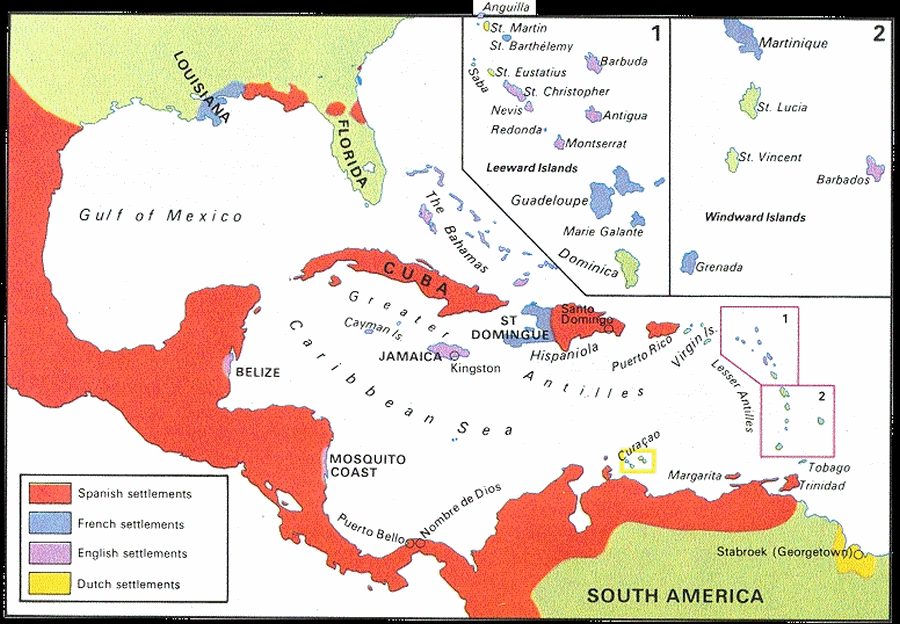
European powers in the Caribbean
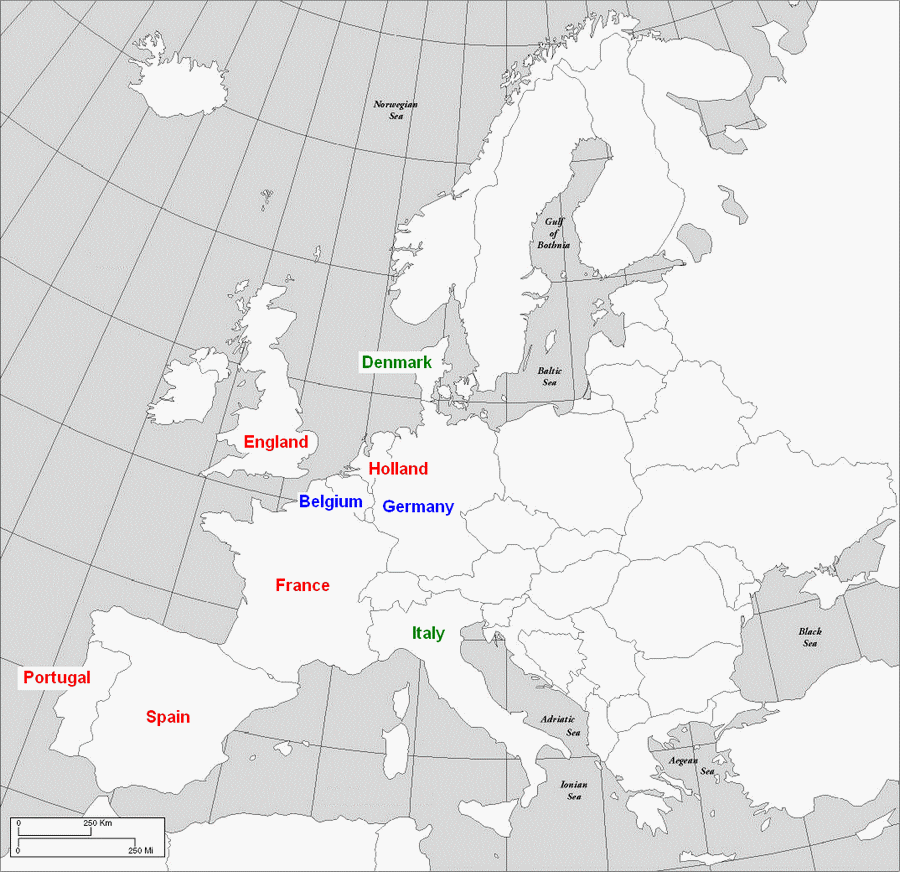
European countries involved in the colonial enterprise with the five major maritime powers shown in red
Literature on Caribbean English
.gif)
.gif)
.gif)
.png)
.gif)
.gif)
Bartens, Angela 2026. The Anglophone Caribbean Rim In Natalie Schilling, Derek Denis and Raymond Hickey (eds) The New Cambridge History of the English Language, Vol. 5: North America and the Caribbean. Cambridge: Cambridge University Press, pp. 785-818.
Hackert, Stephanie 2026. North American-Caribbean Linguistic Connections In Natalie Schilling, Derek Denis and Raymond Hickey (eds) The New Cambridge History of the English Language, Vol. 5: North America and the Caribbean. Cambridge: Cambridge University Press, pp. 819-852.
Kouwenberg, Silvia 2026. English in Jamaica: Between Local and Foreign In Natalie Schilling, Derek Denis and Raymond Hickey (eds) The New Cambridge History of the English Language, Vol. 5: North America and the Caribbean. Cambridge: Cambridge University Press, pp. 752-784.
Smith, Norval 2026. Early English-Lexifier Creole in the Circum-Caribbean Area In Natalie Schilling, Derek Denis and Raymond Hickey (eds) The New Cambridge History of the English Language, Vol. 5: North America and the Caribbean. Cambridge: Cambridge University Press, pp. 691-725.
Williams, Jeffrey P. 2026. The Caribbean Anglophone Contact Varieties: Creoles and Koines In Natalie Schilling, Derek Denis and Raymond Hickey (eds) The New Cambridge History of the English Language, Vol. 5: North America and the Caribbean. Cambridge: Cambridge University Press, pp. 726-751.